How safe spaces and after-school programs are transforming students’ lives across Latin America

Community schools as a comprehensive strategy to transform schools into inclusive, safe and supportive environments across Latin America.

September 22, 2025 by Mario Roberto Chavez, Glasswing International
|
6 minutes read
Students play together during an extracurricular club, building skills and confidence. Credit: Abraham Vargas/Glasswing International

Students play together during an extracurricular club, building skills and confidence.

Credit: Abraham Vargas/Glasswing International

In Latin America, where more than 10 million children and adolescents are at risk of dropping out of school, education is more than pathway to academic achievement—it’s a lifeline.

Particularly in Central America, where child poverty rates exceed 50% in some countries, public schools often struggle with overcrowding, poor infrastructure and limited psychosocial support.

Amid these challenges, Glasswing International’s community schools model has emerged as a comprehensive strategy to transform schools into inclusive, safe and supportive environments.

Originally inspired by broader community school approaches seen in the US, this model has been adapted to the specific conditions of Central and Latin America where schools often serve as the only structured and protective spaces available for children.

In these contexts, the strategy goes beyond extended learning time or academic enrichment: it becomes a space for social cohesion and helps young people to develop hope and higher expectations for their future.

Glasswing’s community schools strategy transforms public schools, particularly those in vulnerable rural and urban communities, and in some areas with significant indigenous populations, into inclusive, protective spaces where teachers, students, families, and community members share a commitment to creating safe environments and expanding opportunities for learning and development.

Schools are selected through a rigorous process to ensure leadership commitment, safety, adequate infrastructure and willingness to host a dedicated school coordinator who oversees program activities in coordination with the educational community.

Teachers participating in the program receive training in active learning methodologies and restorative practices, integrating these approaches into both classroom teaching and extracurricular activities.

Community school model components include: after-school clubs, academic tutoring, leadership opportunities, mental health promotion and community-based initiatives—all supported by trained volunteers from the local community or partner organizations and in collaboration with teachers.

Funding comes from a combination of private sector partnerships, international cooperations and individual donors.

Since its launch in El Salvador in 2010, the Glasswing community schools model has expanded to Guatemala, Honduras, Costa Rica, Panamá, México, Colombia and the Dominican Republic, benefiting more than 500,000 students to date.

In 2024 alone, the model directly reached over 10,500 students.

Implementation is adapted to each country’s context and carried out in close collaboration with ministries of education and school authorities which help promote protective systems such as safe learning environments and encourage meaningful family engagement through parent workshops and community events.

These efforts ensure that schools become inclusive and protective spaces where students can thrive academically and emotionally while sustaining long-term impact and responding to local needs.

This work aligns with the GPE’s vision of ensuring that all children, particularly in lower-income and fragile contexts, have access to quality learning opportunities.

By partnering with ministries of education and supporting systemic innovations such as community-based learning and inclusive after-school models, Glasswing contributes to broader efforts to achieve Sustainable Development Goal 4.

The model has also been the subject of multiple country-level evaluations, particularly in El Salvador, where randomized controlled trials and mixed-method studies conducted by institutions such as the World Bank have shown positive results among participants (see here for reducing school violence in Central America through social-emotional learning; here for after-school programs in El Salvador; and here for an intervention for vulnerable students ages 10 to 16).

These findings underscore the model’s effectiveness in fostering socio-emotional development even in high-violence settings.

In 2024, Glasswing’s community schools strategy reached more than 10,500 students across 6 countries.

To better understand their experiences and the effects of the program, a retrospective survey was administered to more than 1,400 students from participating schools.

This data provides vital feedback, grounding the outcomes in the voices of those who matter most: the students themselves.

Youth find their voice and express themselves in safe and inclusive spaces. Credit: Abraham Vargas/Glasswing International

Youth find their voice and express themselves in safe and inclusive spaces.

Credit:
Abraham Vargas/Glasswing International

Building environments where youth can prosper

One of the most important findings from the survey is that nearly 3 out of 4 students (73.5%) feel their school environment is a place where they can grow, learn and be themselves.

This goes beyond just physical safety. Students consistently reported feeling emotionally supported and respected by teachers and peers, whether in the classroom or during after-school club activities.

In Guatemala, for instance, 72.4% of students reported feeling safe and respected in their school environment.

They highlighted the emotional support they receive from both peers and teachers—whether in class or during club activities.

These safe and inclusive conditions were present in most schools, where students emphasized how the program had helped them express themselves more openly and feel more secure in their identities.

Participation in leadership and debate clubs has empowered students to actively engage in their communities.

Nearly 43% of students reported taking on leadership roles, while a staggering 93% said the activities helped them influence their environments positively.

Many talked about helping friends, settling conflicts calmly, taking the lead in school activities and feeling more comfortable sharing their emotions.

These changes matter not just for school, but for life. They show growth in empathy, communication and managing emotions.

“In meetings, when making announcements, I feel confident and I enjoy leading activities—for example, rallies.”

16-year-old student, Honduras
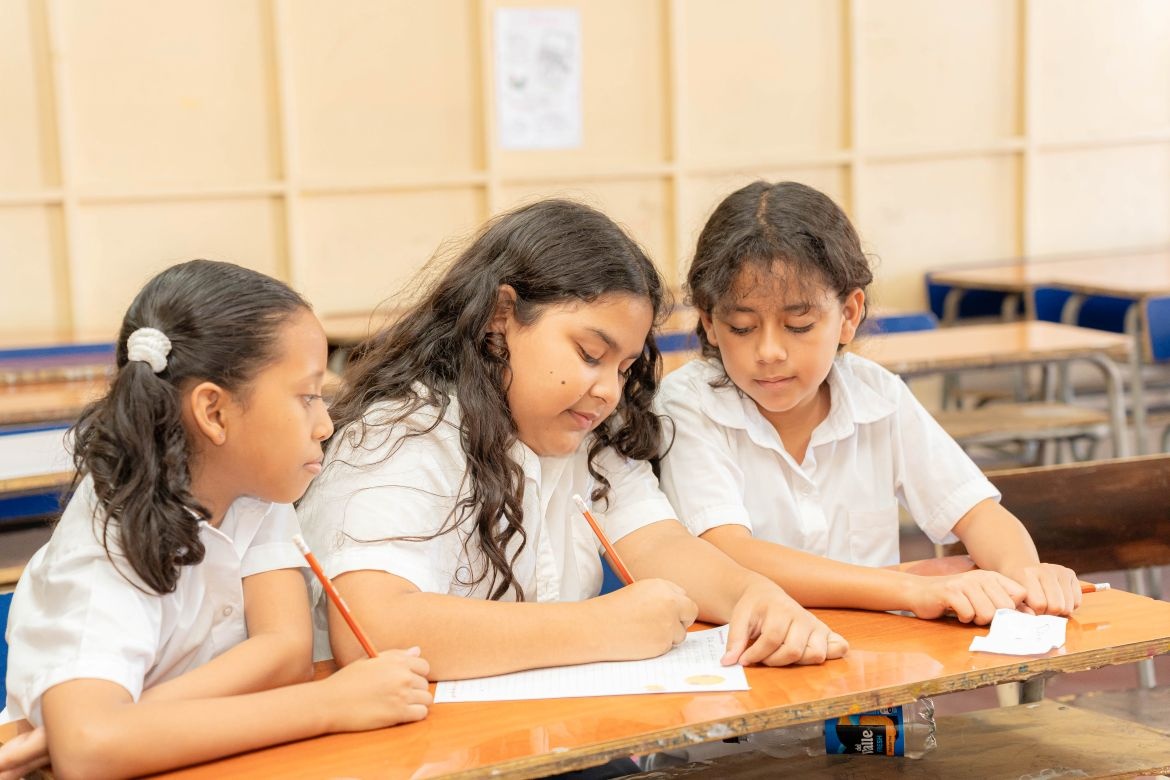
Through extracurricular clubs, students build self-esteem and strengthen family connections. Credit: Abraham Vargas/Glasswing International

Through extracurricular clubs, students build self-esteem and strengthen family connections.

Credit:
Abraham Vargas/Glasswing International

Becoming more engaged learners

Whether through academic reinforcement, the arts or sports, extracurricular clubs are sparking curiosity and motivation among students.

This renewed energy is translating into real outcomes: students reported better academic performance, greater interest in learning and even new dreams for the future.

In Honduras, for example, 96.8% of students who participated in tutoring clubs reported that these activities helped them improve their academic performance.

Specifically, 71.1% said the support helped them complete homework correctly, 25.7% said it helped them pass certain subjects and 22.5% attributed passing their school year directly to these sessions.

This shows how tailored academic support, when combined with emotional encouragement, can significantly influence students' educational outcomes.

“In math class, I used to feel frustrated… Now I understand more, and I enjoy it.”

11-year-old student, Honduras

Agency and emotional intelligence

The survey also revealed that 67.1% of students felt they developed individual assets like critical thinking, emotional awareness and self-control.

They reported improvements in motivation to attend school, a better understanding of class content and a growing sense of belonging.

Over 74% of youth said they now feel capable of setting and achieving personal goals, driven by improved self-confidence and perseverance.

In Guatemala, 77.1% of students stated that the extracurricular clubs program helped them strengthen their sense of agency.

Participants reported improvements in planning skills, perseverance, and self-efficacy, with 81.9% saying they now believe they can succeed if they try.

Additionally, 76.8% said they have set high expectations for themselves, and nearly 80% affirmed feeling more confident in their abilities and more accepting of who they are.

These results show how intentional investment in emotional and social development builds students’ inner resources to take charge of their learning and lives.

Creating stronger bonds with positive figures

Ninety-six percent of participants said they now have someone they trust and can turn to for support. On average, students identified at least 3 such people in their lives.

These trusted figures (volunteers, teachers or peers) help them talk about their feelings, navigate difficulties or even support them with schoolwork. This sense of connection is foundational for well-being.

In El Salvador, 100% of students reported having at least one trusted person they could rely on for support. Many described their ability to identify two or more figures they could confide in, including teachers, peers or club facilitators.

These bonds were crucial in helping them cope with emotional stress, improve communication and stay motivated at school.

Students shared that through their participation, they not only felt listened to but also learned how to offer support to others, creating a ripple effect of empathy and trust throughout their school communities.

Supportive environments help students stay motivated, attend school and thrive. Credit: Abraham Vargas/Glasswing International

Supportive environments help students stay motivated, attend school and thrive.

Credit:
Abraham Vargas/Glasswing International

Why student engagement matters for learning

These findings show that when students feel safe, supported and connected, they thrive. Across Latin America, thousands of children and adolescents are not only remaining in school, but doing so with a renewed sense of purpose, identity and possibility.

While challenges persist, particularly in areas such as conflict resolution, self-regulation and equity of access, the evidence suggests that integrated, community-based educational models can generate meaningful and lasting change.

These efforts not only benefit individual students but also strengthen the social fabric of their families and communities.

In regions affected by systemic exclusion and persistent inequality, initiatives like community schools offer more than support, they offer opportunities, agency and hope.

“I’ve made new friends, stayed motivated, and now I believe we can all achieve our goals.”

14-year-old student, Guatemala

Related blogs

Leave a comment

Your email address will not be published. All fields are required.

The content of this field is kept private and will not be shown publicly.

Comments

  • No HTML tags allowed.
  • Lines and paragraphs break automatically.
  • Web page addresses and email addresses turn into links automatically.