Rising together: How Nigerian schools are meeting the needs of refugee and host students

Story highlights
- Cameroonian refugee children arriving at schools in Nigeria faced overcrowded classrooms, a shortage of teachers and a lack of basic supplies—making learning difficult.
- A GPE-funded program implemented by Save the Children is transforming schools across five states, supporting both refugee and host community students.
- These efforts support the Nigerian Federal Ministry of Education’s broader response to the education crisis among refugee children.

This story was written in collaboration with Save the Children.
In just a few years, Ugugu Community Primary School in Benue State has grown from fewer than 50 students to over 500—most of them Cameroonian refugees.
This growth is not by chance: it reflects a coordinated effort spearheaded by the government of Nigeria through the Federal Ministry of Education to address the educational needs of displaced children.
With a GPE grant of US$5 million for 2024-2025 and implementation support from Save the Children, the ministry is expanding access to education for 24,200 refugee children and 7,260 host community children across the five states most affected by the refugee inflow.
Refugee inflow puts pressure on schools in eastern Nigeria
Over seven years into the conflict in southwestern Cameroon, the movement of refugees into Nigeria continues unabated, intensifying pressure on already strained host communities.
As of July 2025, UNHCR reported over 119,000 Cameroonian refugees living across Akwa Ibom, Adamawa, Benue, Cross River and Taraba states.

Among them is Smile, a 14-year-old girl who fled Cameroon with her mother after losing her father to the conflict.
She lives in a refugee camp in Ikyogen, Benue, and attends RCM Primary School Ahondo.
Like many refugee children, Smile initially found the transition daunting.

“When I arrived at school, I felt bad because I did not have a uniform or any school materials. I could not read a word, unlike my classmates. The school felt dark to me, like I was in the wrong place.”
Smile’s experience mirrors widespread challenges: including overcrowded classrooms, teacher shortages and child protection concerns that can hinder school attendance.

A remote school on the frontlines of a crisis
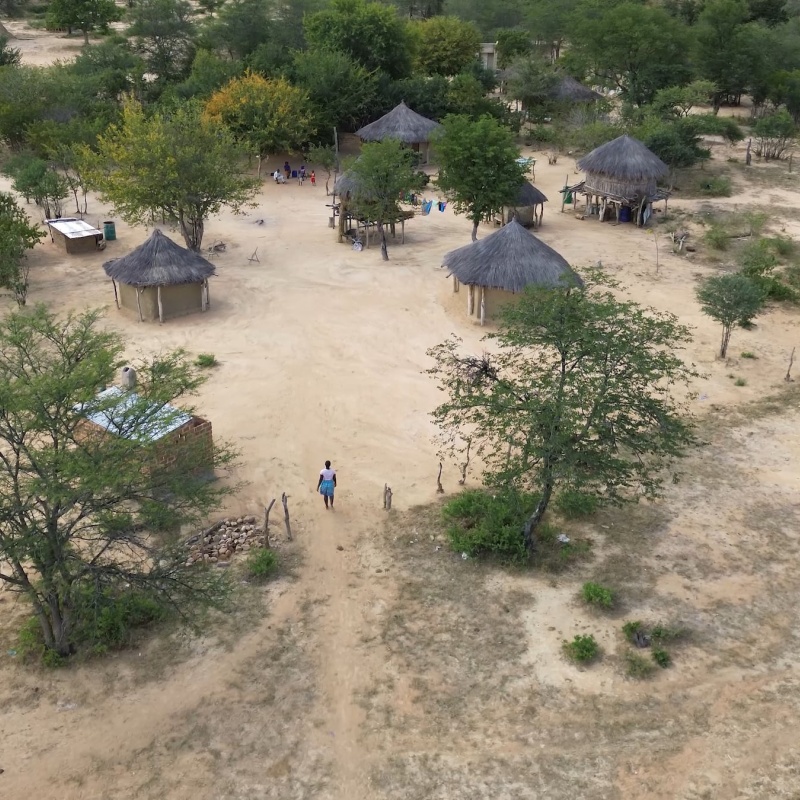
In Ugugu, Benue, a village three hours from the nearest main road, conditions are especially challenging.
Before receiving support, Ugugu Community Primary School had just three classrooms and a mud hut for the principal’s office.
With no source water or toilets, and lessons taught under trees, both students and staff struggled, and many parents opted to send their children to work instead.
The arrival of refugee families pushed an already fragile system to the brink—making support not just necessary, but urgent.
Rebuilding schools—one lesson at a time
Infrastructure upgrades have played a critical role in the transformation of schools like Ugugu Community Primary school, where a two-classroom temporary learning structure was built and the original building renovated.
To meet rising demand for education, eight volunteer teachers were recruited and trained in literacy and numeracy methods, including Teaching at the Right Level (TaRL)—tailoring lessons to each child’s pace and helping students catch up.
“TaRL has made teaching easier for volunteers and learners. Some pupils could not recognize the alphabet or read, but we have now seen big improvements.”
To date, across the five states, almost 25,900 children have received learning kits with school bags, writing materials and water bottles—small changes that have boosted attendance and classroom engagement.
Over 5,500 more students are expected to receive kits by the end of the GPE-funded program.

“The learners kits help me because I have all the materials. I can now spell my name and read words. I even teach my younger siblings.”
At Ugugu, the GPE program helped establish a school-based management committee and revived the parent-teacher association, fostering community ownership and long-term support for education.
Safety training for school and community leaders also led to new safety and violence-prevention plans to protect students in school and community settings.

The program is also tackling one of the quiet barriers to girls’ education: menstrual hygiene.
In many crisis-affected settings, stigma and lack of resources mean girls miss school for several days each month.
To address this, 4,500 girls are receiving dignity kits with sanitary pads, underwear, soap and information on menstrual hygiene.
So far, 3,200 girls—including Smile—have received kits and been taught how to use the resources safely and confidently.

“I used to avoid standing up in class because my classmates would laugh if my clothing was stained. The dignity kits helped me feel more comfortable. I no longer miss school during my period.”

“It eased some of the pressure on me. I try to manage the little funds I have to meet Smile’s needs and those of the family, and it is often not enough. Now she has the necessary materials.”
When support meets potential
The impact of the GPE-funded program is clear. Enrollment is up, absenteeism is down and students—including refugees—are more engaged.
Teacher training has transformed the classroom environment with participatory methods and better teaching tools.
The program has also supported integration and inclusion, with refugee children becoming active members of the school community.
“Before, they sometimes felt confused and excluded. Now, with counseling and support, we have seen a major shift in their behavior and learning.”

“Refugee students come to school ready to learn, knowing they belong.”
Despite the progress, challenges remain, particularly the imbalance between student numbers and teachers. With ongoing advocacy from community leaders, efforts are underway to integrate volunteer teachers into the government payroll and ensure continued support.
In partnership with the Teachers Registration Council of Nigeria, Save the Children has supported the registration of 118 volunteer teachers, including qualified refugee teachers, to achieve professional certification.
This initiative not only recognizes their hard work but also makes a direct and lasting impact on the quality of education for learners by professionalizing the teaching workforce.
- 4,447 refugee and host community children reintegrated into the education system.
- 25,869 children received learning kits, with 5,591 more to be distributed in 2025.
- 3,195 girls received dignity kits, with 1,305 more to be distributed in 2025.
- 542 teachers trained in Teaching at the Right Level (TaRL).
Collaborative support is transforming education
The Nigerian Federal Ministry of Education recognizes that the futures of refugee and host community children are deeply interconnected. Leading the response, the government of Nigeria is advancing a collective approach to safe, inclusive and quality education.
In collaboration with the State Agency for Mass Education, the State Universal Basic Education Board, and Save the Children, the Ministry of Education mainstreamed examination for over 4,400 refugee and host community students through an accelerated learning program.
The joint effort also led to the creation of a unified strategy and a detailed work plan, paving the way for these children to transition into formal schools.

With funding from GPE—including support through accelerated funding and Multiplier grants—Nigeria is addressing immediate needs as well as laying the groundwork for a stronger, more inclusive education system—one that can better support both refugee and host community children, now and in the years to come.
More country journeys