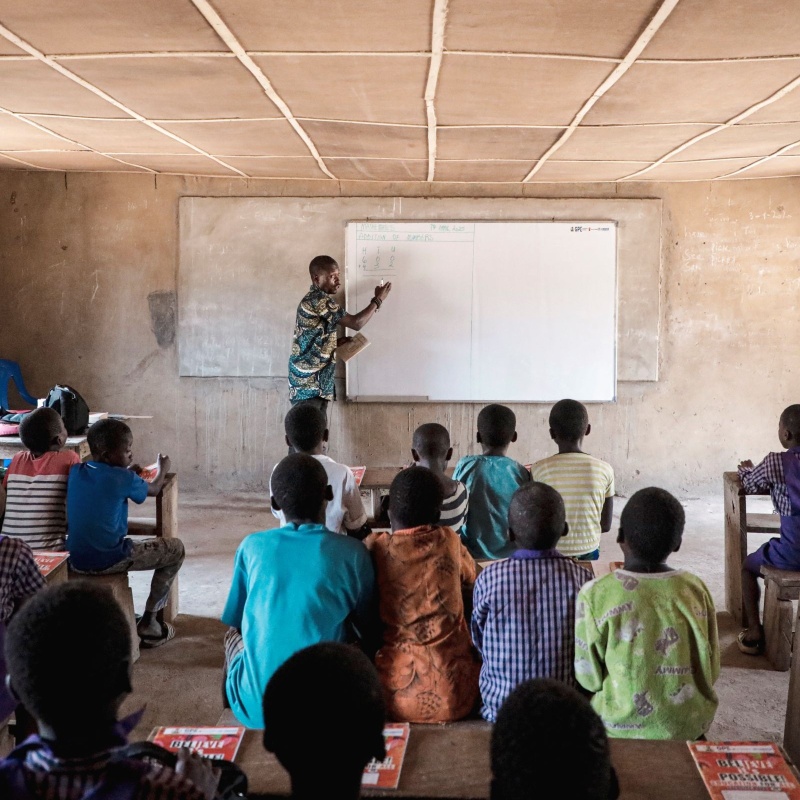
Zimbabwe: Advent's second chance at education

Story highlights
- In Zimbabwe, the likelihood of a girl from a poor, rural background completing secondary school is low, limiting pathways to sustainable livelihoods.
- The Ministry of Primary and Secondary Education, with support from GPE and the Campaign for Female Education (CAMFED), is changing the narrative by breaking down barriers that have kept marginalized girls out of classrooms.
- With financial, material, learning and life skills support, over 8,300 secondary school girls are staying in school and building brighter futures.

At 21, Advent Munenge walks to school each day with determination—not just as a student, but as a mother, daughter and symbol of resilience in her community.
She was 15 when she dropped out of school after becoming pregnant. The father left her to raise their child on her own.
In her rural village in the Binga district of Matabeleland North province, Advent’s dreams of education felt out of reach—but never died.
Getting back to school
When Advent decided to return to school, she was nervous about how her family would react and knew they couldn’t afford school fees.
“I hesitated to inform my family about my decision, fearing their reaction due to the previous mistake I had made,” she recalls.
But her family responded with love and support. Her parents began molding bricks to raise money for fees and Advent wove baskets to purchase books.
Then came the support that changed everything. Financing from GPE's Girls’ Education Accelerator and implementation support from the Campaign for Female Education (CAMFED) enabled the Ministry of Primary and Secondary Education to address some of the barriers preventing Advent from attending school.
GPE funding covered her school fees, uniforms and stationery and provided mentorship. She returned to school at age 19, and for the first time, Advent could focus entirely on learning.
“Fortunately, I received additional support from CAMFED and GPE,” she says, “making it possible for me to return to school and focus on my studies. I make sure that I work hard. I am determined to create a better life for myself and my child.”
Advent's mother takes care of her child during school days, with Advent helping in the household in the evenings and studying after dinner.

“Advent’s return to school is not just a personal victory, but a national milestone that speaks to the progress we are making in ensuring inclusive and equitable education. Through the support of the GPE Girls’ Education Accelerator and our partnership with CAMFED, we are breaking down the barriers that have for too long kept girls out of classrooms. This investment is securing brighter futures for thousands of children across Zimbabwe and strengthening the foundations of our education system.”
Determination, support—and results
Advent passed her lower secondary school exams with high grades in all subjects. This achievement opened doors to new opportunities: she is excelling in upper secondary school and plans to become a nurse.
Critical to Advent's success is support from female secondary school graduates in her community, such as Buchedo Munkuli.
Buchedo is one of 1,090 CAMFED-trained peer educators who volunteer at the secondary school from which they graduated for 18–24 months to help students like Advent develop study and life skills.
These young women share a background of hardship and exclusion, and their sisterhood of support is creating hope, opportunity and change at scale.


A support system makes all the difference
The peer-led support system, implemented across five countries including Ghana, Malawi, Tanzania, Zambia and Zimbabwe, is a tried and trusted model: on average, every girl who joins CAMFED's leadership network supports another 3 girls in turn.
Beyond the classroom, Advent also receives guidance from a peer mentor who helps her pave her post-school pathway.
With GPE funding, CAMFED has trained 1,090 peer mentors to work with girls after they complete lower secondary education.
The mentors deliver a 6-month training program covering elements such as basic business skills, financial literacy, sexual and reproductive health, interview skills and resume development.
They also connect young graduates with entrepreneurship training opportunities.


A brighter path for girls
In Zimbabwe, the likelihood of a girl from a poor, rural background completing secondary school is low, limiting pathways to sustainable livelihoods in adult life.
More girls than boys drop out of school due to intersecting challenges, including financial pressures, food insecurity, gender inequality, and early marriage and pregnancy.
Advent is one of over 8,300 secondary school girls receiving holistic support—financial assistance for school fees, school supplies and uniforms, and guidance both in school and post-school—to help them complete secondary education and transition beyond.

“Advent’s story is a reflection of the wider transformation we are seeing across Zimbabwe. With support from the GPE Girls’ Education Accelerator, implemented with CAMFED, thousands of marginalized girls are back in school, excelling, and inspiring their peers. This partnership is strengthening our education system, ensuring that no child is left behind, and advancing our national goal of equitable access to quality education for all.”
GPE has also funded the development and scale-up of a national early warning system to identify children at risk of dropping out of school and support them to stay in school.
The early warning system model was developed by UNICEF and CAMFED in close collaboration with national and district government officials and through consultations with students, parents, teachers and school leaders to better understand key factors driving dropout.
To mitigate dropout, the early warning system includes better district oversight of schools; data collection processes at the school and district levels; and guidance, counseling and life skills provision within schools and through home-school links.
GPE's partnership approach and its dedication to putting gender equality at the heart of education system planning and implementation has helped align sector stakeholders in support of Zimbabwe's goal to deliver equitable access to quality education.
The result is stronger support for students like Advent, with a multiplier effect on communities throughout the country.
Advent's message to other girls is simple:

"If you get to go to school, hold that chance tightly and use it to make a change."

And she’s already planning to pay it forward: "I see myself helping girls so that the curse of poverty stays out of our community."

More country journeys