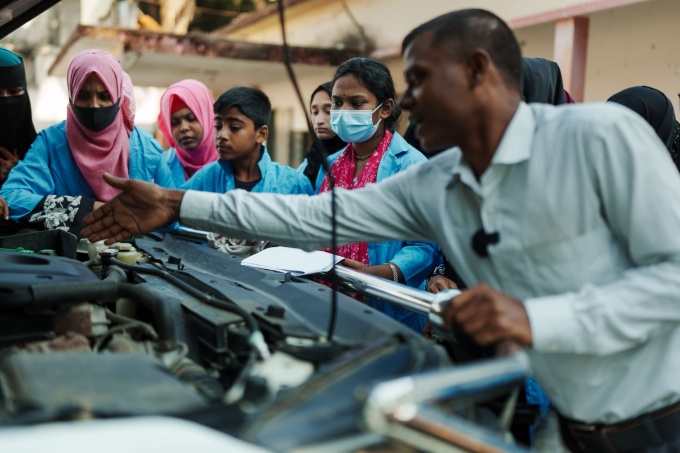
Students with their teacher during a lesson. Credit: World Bank

Partner since:

Total grant support: US$182,891,613

Grant eligibility:

  • Multiplier
  • System capacity
  • System transformation

Education sector plan

Objective: Contribute to better planning, coordination and implementation of the education programs in alignment with national aspirations.

Other key documents

Coordinating agency: British High Commission in Bangladesh

GPE Team lead: Javier Luque

Contact the GPE team lead

Transforming education in Bangladesh

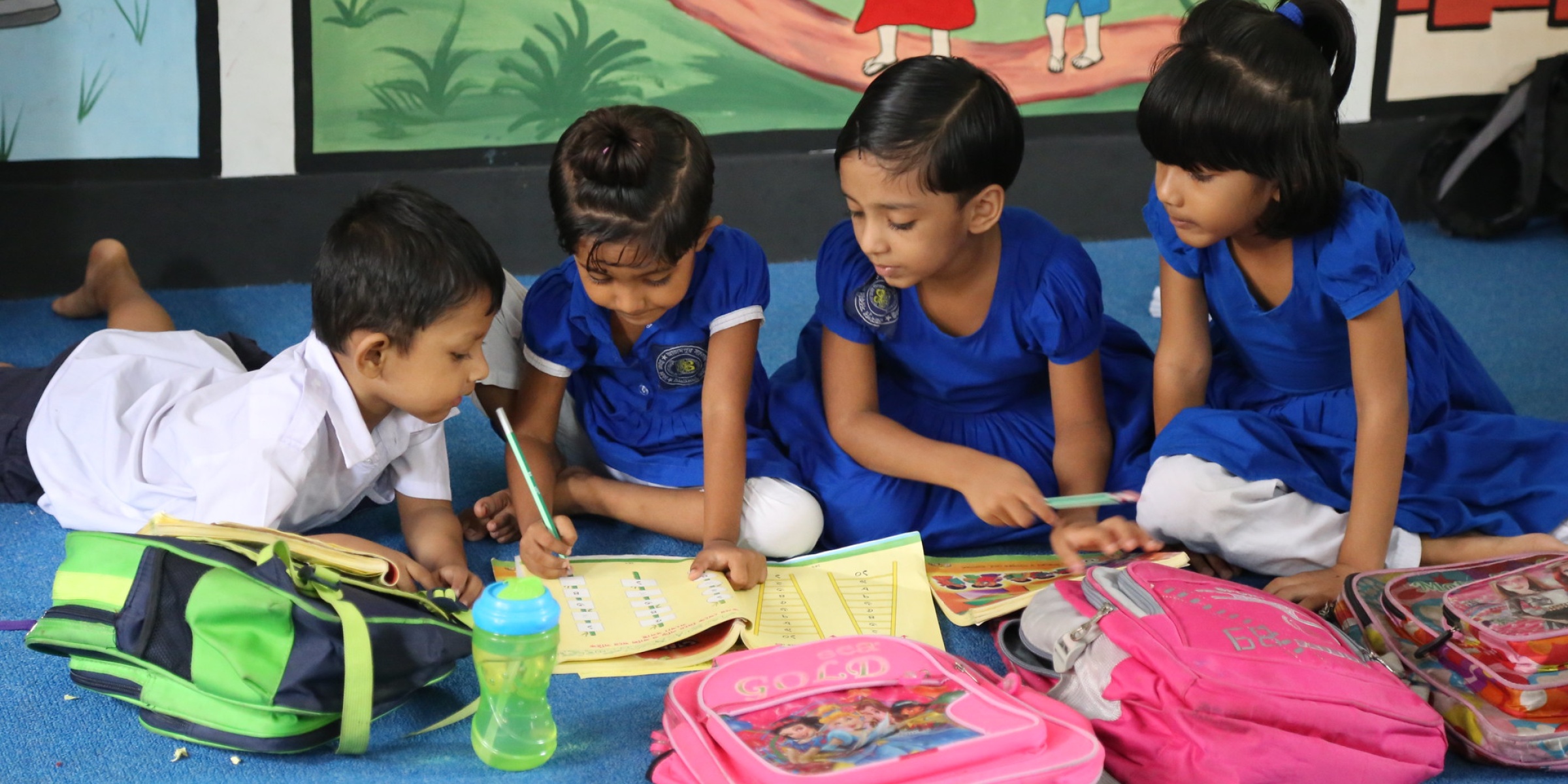
Bangladesh’s education system caters to about 40 million students. Learning is offered through both formal and non-formal channels.

The 2020 Education sector analysis reports that the country has achieved near-universal primary education enrollment with gender parity. The net enrollment rate was 98% in 2018.

Since the influx of refugees from Myanmar, the government has led the humanitarian response in Cox’s Bazar. The district historically had some of the lowest primary education indicators in the country. Initially, school attendance rates fell, especially for girls, and dropout rates increased across the district.

By 2018, enrollment had significantly improved in the district, to a net enrollment rate of 94.6% compared to the national average 98%. However, only 60% of children and youth aged 12 to 24 reported having completed primary school in Teknaf and 75% in Ukhiya.

Due to government restrictions and policy directives, Rohingya children are only allowed informal education, and it must adhere to the Guideline for Informal Education Program.

Of all Rohingya refugees, 51% are children under the age of 18. Despite significant progress over the last two years, more than 30% of Rohingya children and youth aged 3 to 24 still require access to education. 83% of adolescents aged 15 to 18 lack access to educational or skills development activities.

Result story

Bangladesh: Equipping out-of-school youth with skills for work

  • In Cox’s Bazar, home to the world’s largest settlement of refugees, almost 50% of secondary school age youth do not attend school.
  • With support from GPE and UNICEF, Bangladesh is expanding access to quality education and skills development for refugee children and host community children.
  • A skills-focused literacy program has enabled 6,825 out-of-school youth from the host community to develop skills for jobs in high-growth sectors.

Key data

13%

out-of-school rate for children of lower-secondary school age

20%

of children start learning one year before entering primary school

74%

of primary teachers have the minimum required qualifications

16%

of government expenditure on education

Grants

(data as of October 08, 2025)

 
  • Type: System capacity

    Years: 2025 - 2029

    Allocation: US$2,110,000

    Utilization: 0

    Grant agent: UNICEF

  • Type: Program development

    Years: 2025

    Allocation: US$399,188

    Utilization: 0

    Grant agent: UNESCO, UNICEF

Civil society engagement

As part of its investment in civil society advocacy and social accountability efforts, GPE’s Education Out Loud fund is supporting:

  • The Campaign for Popular Education (CAMPE) for the 2024-2026 period. This builds on previous support from the Civil Society Education Fund (CSEF).
  • The Institute of Informatics and Development to support national transparency and accountability work in the 2024-2026 period.

Learn more

Latest blogs and news