
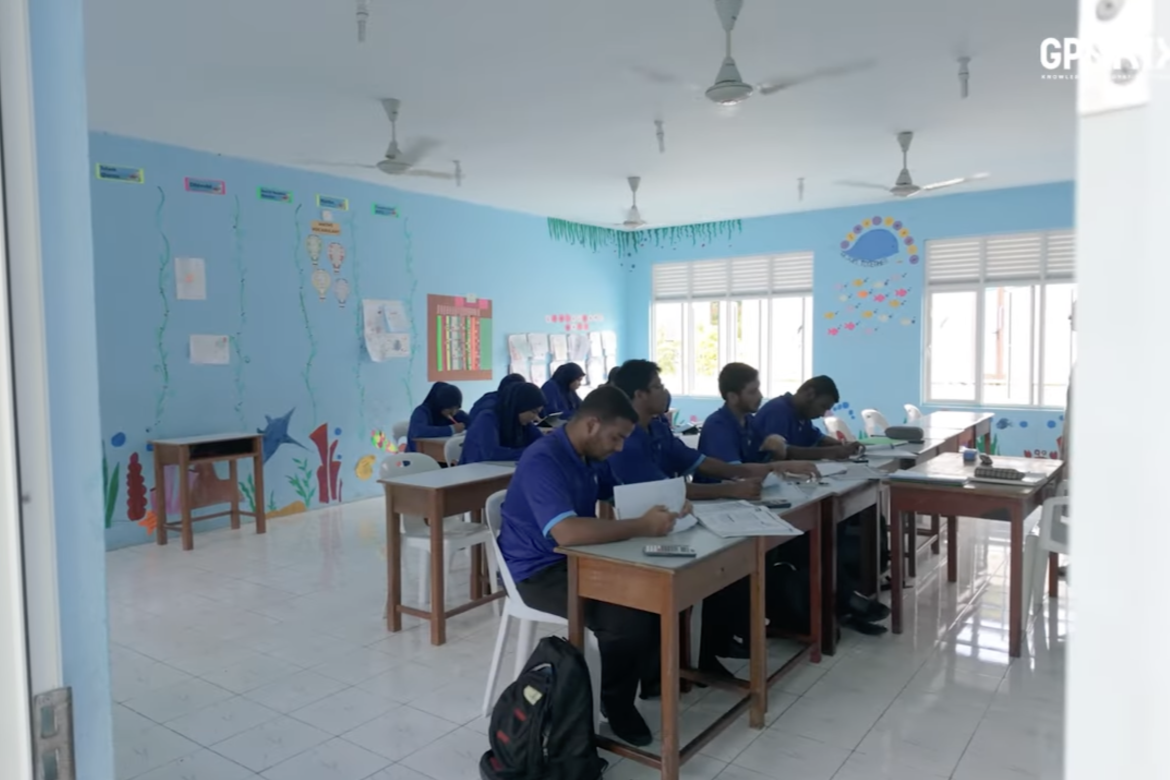
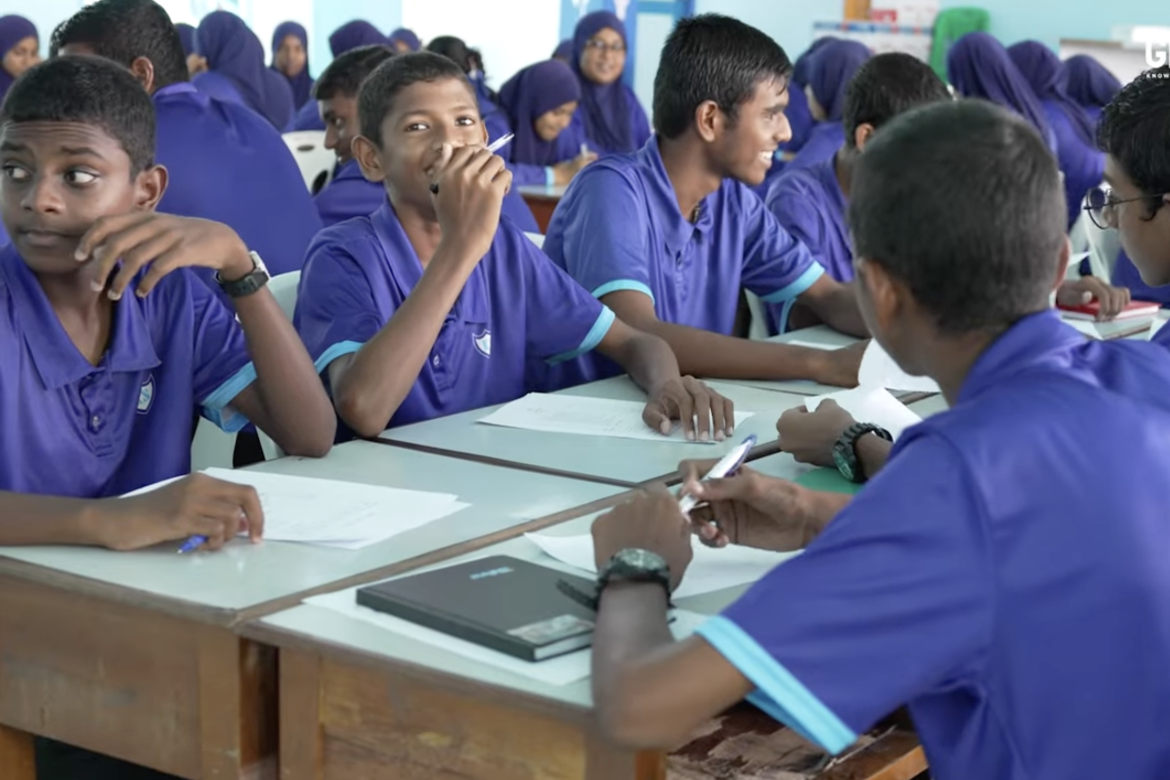
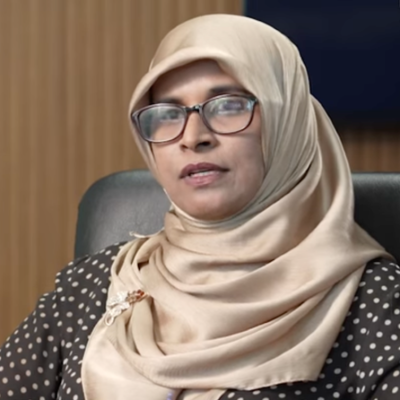
“I was part of the very first A-level class at V. Keyodhoo School and fortunate to be able to continue my education while staying on my home island,” says Haanee Ahmed.
The Maldives consist of 1,196 islands grouped into 26 atolls (strings of coral islands surrounding a lagoon), a geography that poses serious challenges for delivering education to all children of the Maldives.
Until recently, students like Haanee had to move to an island offering higher secondary education to complete their final two years of school (key stage 5 – grades 11 and 12, or A-levels). “Migrating to Malé comes with lots of challenges,” she says. “When our island school started offering A-levels, I was able to avoid them.”
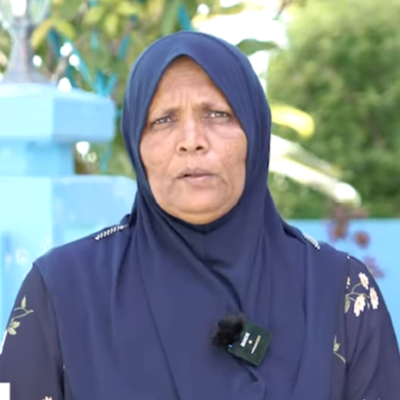
Hussain Simah is grateful he could stay on Keyodhoo Island, his home island, for A-levels. “I would have had to move to another island, and be away from my family and friends,” says Hussain. “It would have been very hard for me. Having my parents with me while I continue my studies has eased a lot of my mental burden.”
Previously, schools needed a minimum of 10 students enrolled to start higher secondary grades. This policy led to significant disparities in access to higher secondary education across the atolls.
On many smaller islands, students had no local option, forcing them to uproot their lives or give up on further education. The move often came with emotional strain – for both students and their parents – as well as high costs for families.
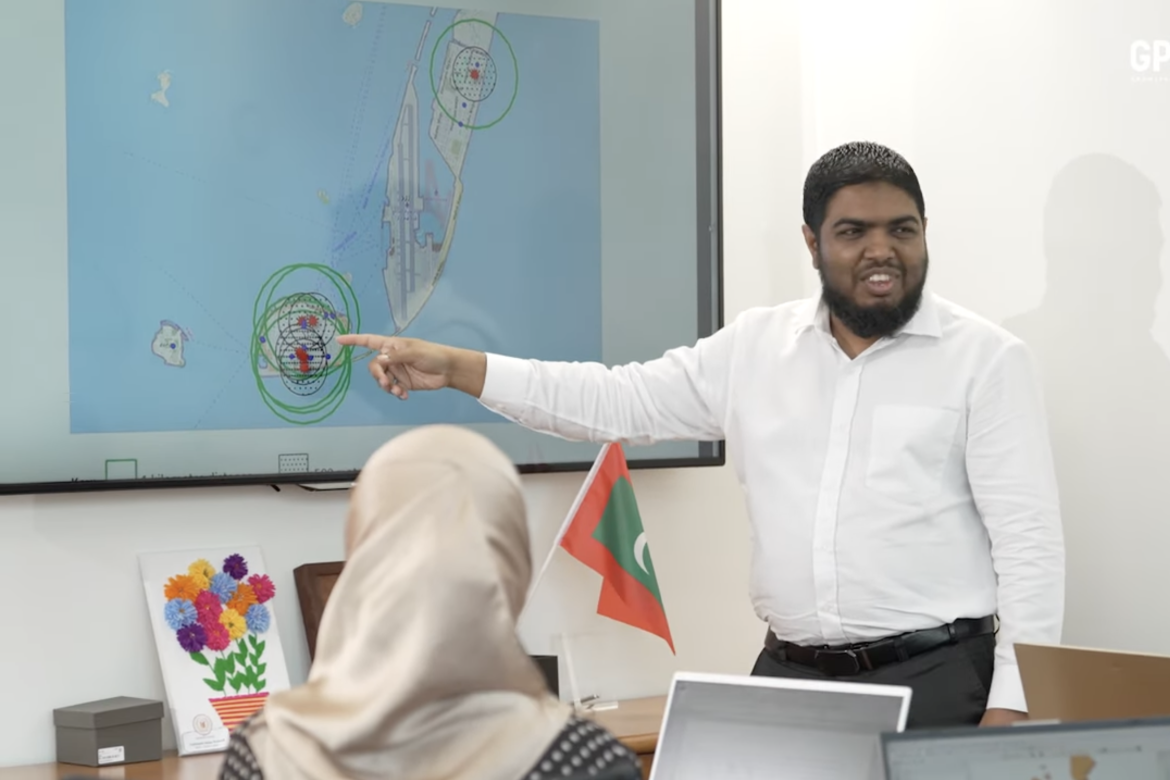
Now, thanks to the smart use of geospatial data, more students can access higher secondary education closer to home.







Wow😍😍truly inspiring 👌👏
Leave a comment
Your email address will not be published. All fields are required.