
In Kiribati, education is everyone’s business

Support from GPE and partners, through a comprehensive and coordinated approach, is improving the Kiribati's education system, ensuring both teachers and students are equipped with the tools, skills, and infrastructure needed to deliver an equitable, inclusive and quality education for all.

October 06, 2025 by Ministry of Education, Kiribati
|
5 minutes read
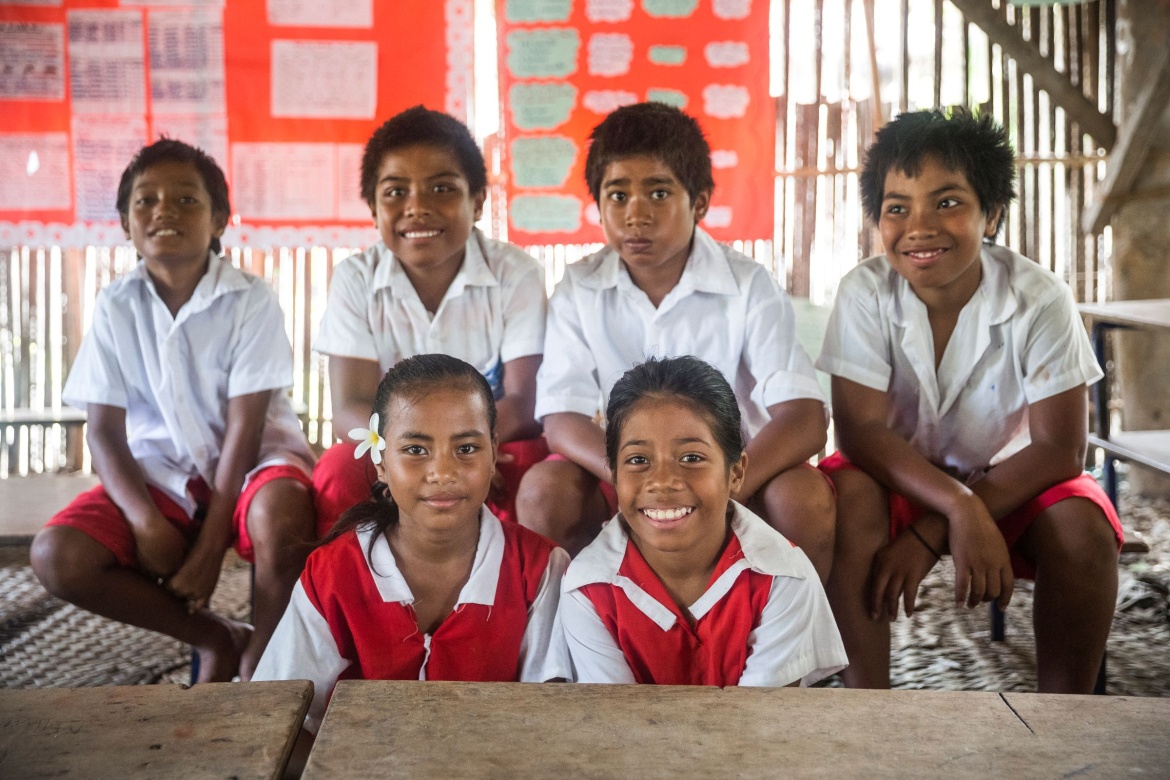
Grade 6 students of Mamatannana Primary School of  Abatao Island, South Tarawa, Kiribati, posing for a group photograph in a classroom. Credit: UNICEF/UN0202239/Sokhin

Grade 6 students of Mamatannana Primary School of  Abatao Island, South Tarawa, Kiribati, posing for a group photograph in a classroom.

Credit: UNICEF/UN0202239/Sokhin

If the 33 islands making up Kiribati were overlayed over a map of the United States, they would extend from west to east and from north to south over the whole country. Kiribati is the only country in the world that extends into all four hemispheres!

These unique geographic features may be useful for trivia purposes, but they make the delivery of services, including education to all children, extremely challenging.

The government, through the Ministry of Education(MOE), however is committed to ensuring that all Kiribati children can have access to equitable and quality education, participate in inclusive learning for students with different needs, in collaboration with parents and communities, and with partners like Australia’s Department of Foreign Affairs and Trade (DFAT) and the Global Partnership for Education (GPE).

Reducing barriers to learning and making education truly inclusive and equitable is MOE’s priorities defined in our Sector Strategy and Partnership Compact, to benefit the entire education system.

Investing in technology and teachers for inclusive education

Despite the logistical challenge of reaching students spread over thousands of miles, we must improve the schools’ infrastructure so that students have the tools they need to learn in a safe and conducive environment to achieve their full potential and become productive citizens.

Better learning starts with better teaching: we need to ensure that teachers have the proper training, skills and support, with ongoing professional development, to teach all students effectively.

Due to our geographic conditions and high turnover of teachers, we recognize the importance of investing in technology to unlock these barriers and promoting technology solutions.

The classic example is the Learning Passport App for remote learning during the COVID-19 school closures.

Online lessons helped many students to continue learning remotely, supported by radio and video programs for those unable to access the Learning Passport App. GPE’s financial support during this difficult time helped us develop strategies for remote learning.

Technology must be part of the solution to reach children in remote islands, and teachers need to be trained to master these tools and techniques. ICT will not just impact children’s learning, but also how the education system as a whole is managed.

To reach children with disabilities, we work with line ministries and NGOs focused on special needs.

In the recent National Inclusive Education Summit with these partners, we discussed ways to address the needs of students with disabilities, ensuring they receive appropriate support and resources.

The participants also agreed on advancing the implementation of the Kiribati Inclusive Education Policy and promoting greater inclusivity in schools.
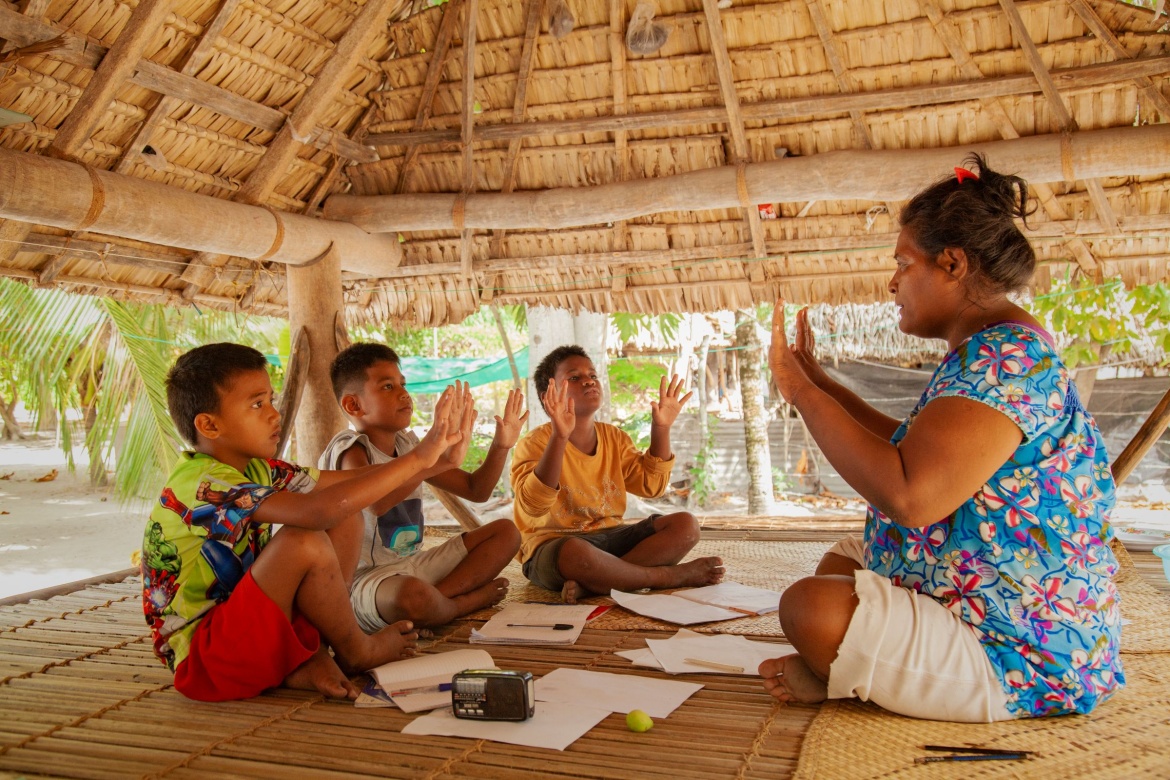
Children in Kiribati during remote learning through Radio lessons. Credit: UNICEF/UN0771689/Rice Chudeau

Children in Kiribati during remote learning through Radio lessons.

Credit:
UNICEF/UN0771689/Rice Chudeau

Partnership and coordination of all actors is key

Because Kiribati is so spread out and the ministry of education being the biggest ministry with many stakeholders, it is critical to partner with all education stakeholders and to coordinate all our efforts.

Our team works through various Committees, with representation from line ministries, mission schools, civil society organizations, teachers’ union, businesses, parents, and communities.

Other mechanisms include the Education Partners in Kiribati (EPiK) Forum and the local education group. The EPiK Forum is an annual event organized by the MOE with development partners and line Ministries.

The key objective of the EPiK Forum is to allow an open dialogue and discussion between MOE and development partners on important education priorities and possible assistance in line with the Education Sector Strategic Plan (ESSP).

The EPiK Forum is complemented by the work of the local education group that coordinates the support and assistance of the Global Partnership for Education (GPE) led by DFAT as the coordinating agency, which allows for quicker consultations and action when necessary.

The group includes development partners and other education stakeholders who share updates and learn from each other.

All education system actors at all levels participate and contribute significantly to education, because, as we like to say in Kiribati: “Education is everyone’s business”.

We see collaboration as essential to reach our goal of all students receiving quality education.

The collaboration mechanisms we have in place help us reduce inefficiencies and duplications, and align support behind the MOE’s priorities. Through them, we can tap the capacities of each partner where they have a comparative advantage to support our needs.

The value of the GPE partnership approach

Overall, the GPE’s support has been valuable to Kiribati. Working through DFAT as the coordinating agency, we can access this support more efficiently and with fewer bureaucratic hurdles, which facilitates quick access to funding and technical support.

And this in turn helps us develop our strategies and implement our activities. This help has been crucial in achieving the goals and priorities outlined in our ESSP, for which we are indeed grateful and appreciative.

In this current GPE cycle, Kiribati through MOE managed to tap all three grants. On the policy side, under the GPE system capacity grant, we were able to enhance the capacity of our staff and develop the Education Sector Strategic Plan, which provides strategic direction for the MOE and guides the support we receive from all development partners.

On the implementation side, the GPE funding has been a key aspect to help us implement our strategic plan effectively and leverage additional support from other partners.

A recent example of successful coordination and of the GPE value is the new Multiplier grant of US$5 million, which leveraged US$30 million from the Asian Development Bank and close to AU$17 million from DFAT.

This funding will create classroom-based computer labs to equip students with hands-on experience in using technology, complementing the recently approved GPE system transformation grant of US$2.5 million aimed at enhancing digital learning and teacher capacity, particularly in outer islands where internet connectivity remains a challenge. This GPE assistance is in collaboration with UNESCO as the grant agent.

Giving students access to digital learning will ensure that the benefits of teacher training translate into improved classroom experiences. The program is expected to train more than 500 teachers and reach 130,000 students over the lifetime of the new facilities.

Other components of the GPE Multiplier include dormitories for a high school in Kiribati and the students at the Kiribati Teachers College (KTC) to enhance academic performance and enrollment, and safe transport for schools in the outer islands.

Together, the GPE Multiplier and system transformation grants, and DFAT and ADB’s co-financing, form a comprehensive and coordinated approach to improving Kiribati’s education system, ensuring both teachers and students are equipped with the tools, skills, and infrastructure needed to support digital learning and improved academic performance.

----------------

GPE thanks the following partners for their input into this blog:

  • Roreti Eritai, Secretary, Ministry of Education, Kiribati
  • Reetina Katokita, Director, Policy, Planning, Research and Development, Ministry of Education, Kiribati
  • Florence O’Connor, Program Manager, Education, Department for Foreign Affairs and Trade, Australia

Related blogs

Leave a comment

Your email address will not be published. All fields are required.

The content of this field is kept private and will not be shown publicly.

Comments

  • No HTML tags allowed.
  • Lines and paragraphs break automatically.
  • Web page addresses and email addresses turn into links automatically.