
Promoting African French-speaking education research – Why academic scholarship needs attention

The REAL Centre and Education Sub Saharan Africa (ESSA) are partnering on a project to raise the visibility of African research and researchers writing in French with support from GPE KIX.

October 01, 2025 by Hélène Binesse, REAL Centre at the University of Cambridge
|
6 minutes read
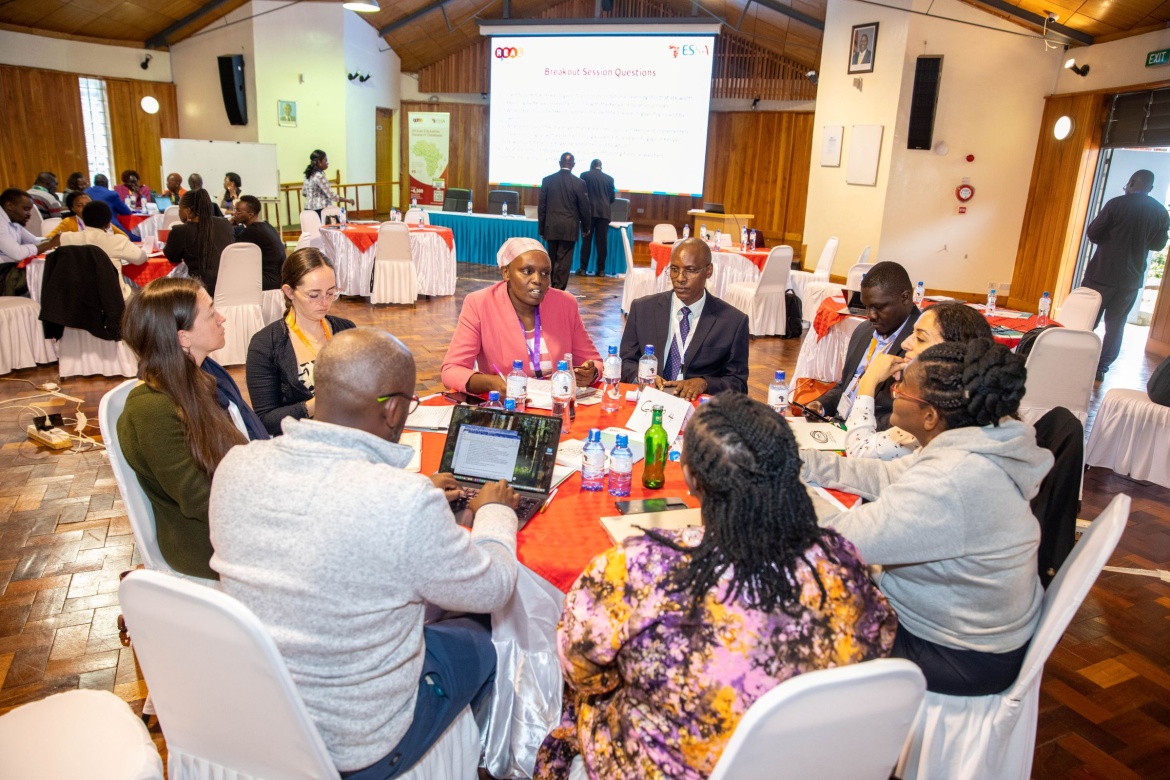
The REAL Centre and ESSA held a series of three workshops on foundational learning for African researchers. Credit: ESSA

The REAL Centre and ESSA held a series of three workshops on foundational learning for African researchers. This photo shows researchers collaborating at the Kenya workshop in May 2025. The workshops were enabled through financial support from the Bill & Melinda Gates Foundation.

Credit: ESSA

Academic scholarship from French-speaking sub-Saharan Africa remains under-recognized and under-supported in global knowledge systems. When academic work on education is not visible or discoverable, it remains disconnected from both policy influence and scholarly dialogue.

This has important implications for designing programs to improve education in the region. Access to country-owned research to inform solutions to improve learning in their context should not be a far-fetched goal.

After all, strengthening academic research in French-speaking Africa is not just a technical task—it is a political and ethical imperative for building inclusive, knowledge-rich education systems.

To support stronger academic ecosystems that provide the locally grounded knowledge needed for context-sensitive solutions, the GPE Knowledge and Innovation Exchange (KIX) is collaborating with Education Sub Saharan Africa (ESSA) and the REAL Centre at the University of Cambridge on a project that brings together researchers, practitioners, funders and policymakers to exchange insights and develop practical responses to shared challenges in education.

Building on existing initiatives, such dialogue is essential for advancing sustainable strategies to strengthen academic research ecosystems and, in turn, support international development programming and progress toward Sustainable Development Goal 4.

French-speaking sub-Saharan Africa academic research is out of view on the global stage

In a recent mapping of Foundational Literacy and Numeracy (FLN) research in sub-Saharan Africa conducted by ESSA and the REAL Centre, we identified only 34 out of 381 publications written in French—and none were listed in international databases such as Web of Science or Scopus.

This is not surprising, given that approximately 95% of indexed publications are in English.

Among the 16 French-speaking journals where relevant articles were found, 11 are not indexed in the SCImago Journal Rank (SJR), highlighting their limited global visibility and academic reach.

Notably, of the 64 studies focused on French-speaking countries, nearly half were published in English and appeared in international databases—reflecting the ongoing dilemma many non-English-speaking scholars face: to publish in English or perish.

Even open-access repositories like the Directory of Open Access Journals (DOAJ) and African Journals Online (AJOL) do little to surface French-speaking African academic work.

As of March 2025, only 117 of the 21,453 journals indexed in DOAJ originated from sub-Saharan Africa—a mere 0.5%. Of these, just 24 came from French-speaking sub-Saharan Africa, with only two listed under education and six under social sciences.

Similarly, out of 865 journals hosted on AJOL, only 60 (7%) come from French-speaking countries and just two of these are education focused.

While part of this limited representation may reflect the fact that many African journals do not currently meet international/regional indexing standards, it nonetheless contributes to the continued invisibility of peer-reviewed research from the region.

A further structural barrier to academic knowledge dissemination in French-speaking Africa is the absence of a robust regional database of peer-reviewed research.

Without accessible and searchable databases, conducting systematic reviews becomes a major challenge – weakening the evidence base available to policymakers and limiting scholars’ ability to identify gaps and build cumulative knowledge.

Yet systematic reviews are foundational to the development of research fields and the synthesis of high-quality evidence. This challenge extends beyond the region as the few systematic reviews in French-speaking education research depend on Google searches—a sign of fragmented dissemination.

A parallel mapping of FLN research in Senegal illustrates the challenge of limited access and visibility: while academic work exists, uncovering it proved a lengthy and laborious process, requiring searches through non-indexed journals, institutional repositories and even library visits. Yet this type of work is necessary to surface national research.

A wider effort is now underway through the GPE KIX Africa 21 hub, supporting an unprecedented mapping of education research in 10 French-speaking sub-Saharan African countries to make African scholarship more visible and strengthen national education system.

Beyond reports: Reclaiming space for academic research

Research in education takes multiple forms, most notably academic publications and research reports.

These modes of knowledge production are not inherently in conflict — they are, in fact, complementary. However, problems arise when the boundaries between them become blurred: when consultancy-style writing overshadows scholarly analysis, when reports are more visible and accessible than academic publications, or when short-term policy imperatives are prioritised over long-term theoretical inquiry.

As an illustration of this problem, the deputy editor-in-chief of the Revue internationale en éducation de Sèvres noted with concern that she frequently receives manuscripts written in the style of consultancy reports rather than scholarly articles.

These issues are particularly pressing in contexts where academic capacity is already under strain, and where funding structures favor rapid outputs over deeper, peer-reviewed scholarship. It also points to a deeper systemic challenge.

In under-resourced academic environments, many researchers often rely on consultancy work as one of the few available opportunities for professional engagement and income—privileging report writing over scholarly publication.

As a result, academic writing skills may be underdeveloped or underutilized, and the norms of peer-reviewed publishing become less familiar or attainable.

This dynamic is further complicated by how knowledge circulates. Research reports — especially those commissioned by international organizations — are easier to access and more widely cited than academic publications.

For example, in their own publications, CONFEMEN’s Programme for the Analysis of Education Systems (Programme d’Analyse des Systèmes Éducatifs de la CONFEMEN - PASEC) tends to reference previous PASEC reports and other grey literature, with limited engagement with African peer-reviewed academic research in French.

This limitation in referencing African academic research in French likely stems from the broader issues of accessibility and discoverability highlighted earlier. This creates a self-reinforcing loop in which consultancy-based knowledge circulates widely, while academic contributions remain marginalized or overlooked.

Clarifying the distinction between academic research and research reports is not about devaluing the latter. Rather, it is about ensuring that academic research is recognized and supported as a public good—one that informs not only policy, but also pedagogy, theoretical development and critical reflection.

To better understand the dynamics at play, it is essential to examine how academic research and consultancy-driven outputs interact, and what this means for the future of educational knowledge production and dissemination in the region.

How to strengthen French-speaking academic research

This GPE KIX supported research will look at the following questions:

  • How can we ensure that researchers in French-speaking African countries have meaningful opportunities to contribute, including access to training, mentorship and institutional support to strengthen their capacity to write and publish academic articles in French?
  • Should funders require that every research project include dedicated resources for academic production and dissemination such as peer-reviewed journal articles? Would the creation of a regional indexing system for French-speaking African research, similar to Latin America’s SciELO enhance visibility and access?
  • Might a curated approach, such as the periodic development of thematic research handbooks, help consolidate and communicate key findings more effectively? An international seminar on the production and dissemination of educational research in French-speaking sub-Saharan Africa organized by France Education International with CONFEMEN and the AUF in October 2021 raised this compelling idea of research handbooks, but who would lead such an initiative? With what resources? And how can it be sustained?

There are no easy answers. But these are precisely the kinds of questions that require collective reflection.

Stay tuned for further insights and learnings from this initiative.

Related blogs

Leave a comment

Your email address will not be published. All fields are required.

The content of this field is kept private and will not be shown publicly.

Comments

  • No HTML tags allowed.
  • Lines and paragraphs break automatically.
  • Web page addresses and email addresses turn into links automatically.