Investing in teachers is at the heart of 21st-century quality education for all

With needs rising and the clock ticking down on the SDGs, World Teachers’ Day is an opportunity to remind us why investing in teachers today is important to lay the foundation for quality education that can unlock this generation’s potential for a better future for all.

October 02, 2025 by Ramya Vivekanandan, GPE Secretariat, and Krystyna Sonnenberg, GPE Secretariat
|
5 minutes read
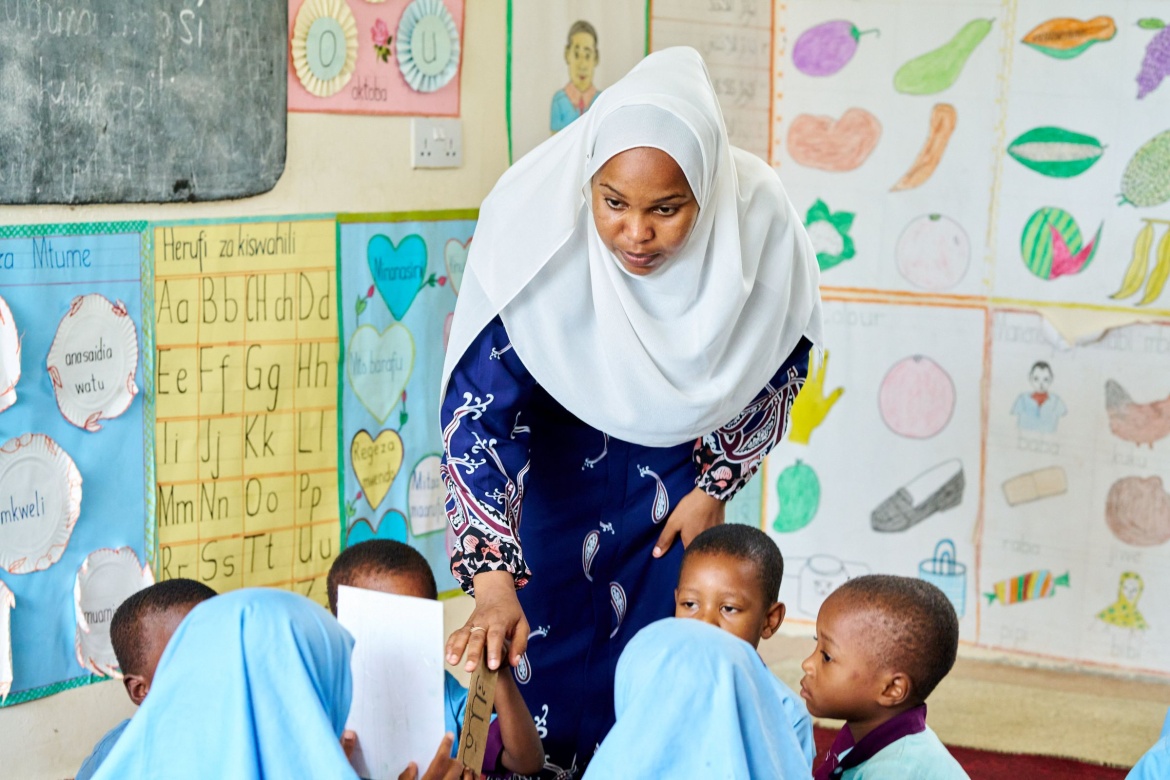
A pre-primary teacher and her students at Maandalizi Michikichini TuTu center in Michikichini, Zanzibar. Credit: GPE/Nainkwa (Trans.Lieu)

A pre-primary teacher and her students at Maandalizi Michikichini TuTu center in Michikichini, Zanzibar

Credit: GPE/Nainkwa (Trans.Lieu)

On October 5th we celebrate World Teachers’ Day, a global moment dedicated to recognizing the vital role teachers play in shaping our societies and futures.

Each year, this day serves as a powerful reminder of the importance of educators and the impact they have on learners everywhere.

This year, with the theme of ‘Recasting teaching as a collaborative profession’, we reflect on the voices of teachers, celebrate their contributions and commit to working together to create a future where their expertise is valued and their profession is strengthened through collaboration.

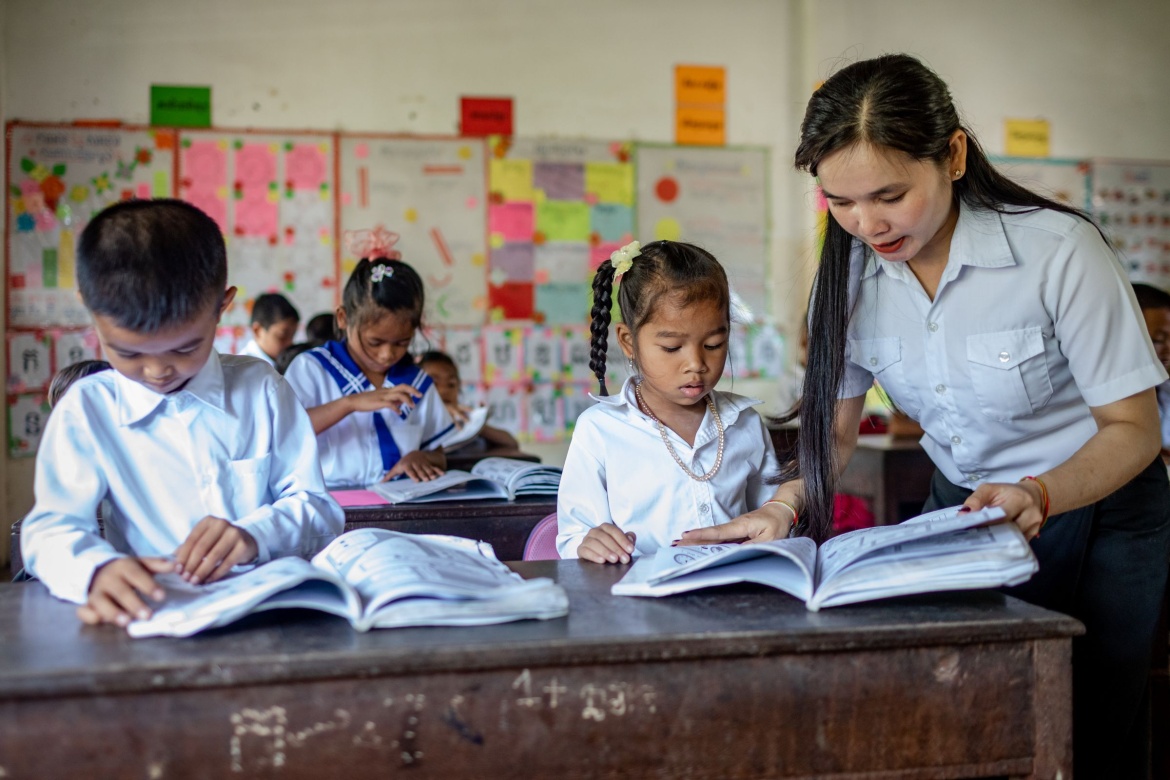
Chhay Kim Hak interacts with her grade one students at Chambak Haer Primary School, Puok District in Siem Reap, Cambodia. Credit: GPE/Roun Ry

Chhay Kim Hak interacts with her grade one students at Chambak Haer Primary School, Puok District in Siem Reap, Cambodia.

Credit:
GPE/Roun Ry

Quality teaching as a pillar of the GPE approach

In alignment with the vision of the 2025 Santiago Consensus, teachers are the cornerstone of resilient and inclusive education systems. This is why GPE supports partner countries to prioritize quality teaching at the heart of education reform.

In Tanzania, there has been a focus on teacher workforce planning and management, gender equality and inclusion, and better teaching and learning environments. Through GPE support, the country is working to enhance teacher education curricula at all levels, improve teacher recruitment and deployment strategies, sustain continuous professional development processes and improve teacher motivation and accountability.

Cambodia has also prioritized teacher reform to improve the quality of education. Working with UNESCO, the GPE-funded Strengthening Teacher Education Programs in Cambodia (STEPCam) initiative has supported the development of a national system for continuous professional development, scaled up the early-grade teacher training program, renovated teacher training centers and upgraded the qualifications and competencies of teachers and teacher educators.

Meanwhile, Tonga is building resilience in its education system with GPE support, equipping teachers to cope with climate-related disasters and strengthening school safety so learning can continue even during crises.

Through such efforts across a range of partner countries over the 2021-2025 period, 4.7 million teachers have been trained through GPE support.

Counting down to 2030

GPE’s work on teachers is underpinned by our partnership approach that insists on inclusive dialogue to inform national decision making and mutual accountability between all actors, including teachers and their representatives.

This implies the active involvement of teachers in education planning, policy development and monitoring processes through local education groups and other structures at the national level.

Under GPE 2030, GPE’s strategic plan for 2026-2030, we will be placing greater emphasis on this issue of teacher engagement, recognizing that while real change must be driven by those closest to the classroom, teachers are often underrepresented in formal processes.

The partnership will strive to strengthen teacher participation and leadership, ensuring that diverse voices—especially teachers who are women, teachers with disabilities and teachers who are living as refugees are included.

This means strengthening the capacity of governments to engage with teachers and work with teacher organizations through platforms such as Education Out Loud where GPE amplifies civil society engagement, advancing inclusive and equitable policy change in more than 60 countries.

We also endeavor to share knowledge and experience to learn how different partner countries and other partners have improved teacher engagement.

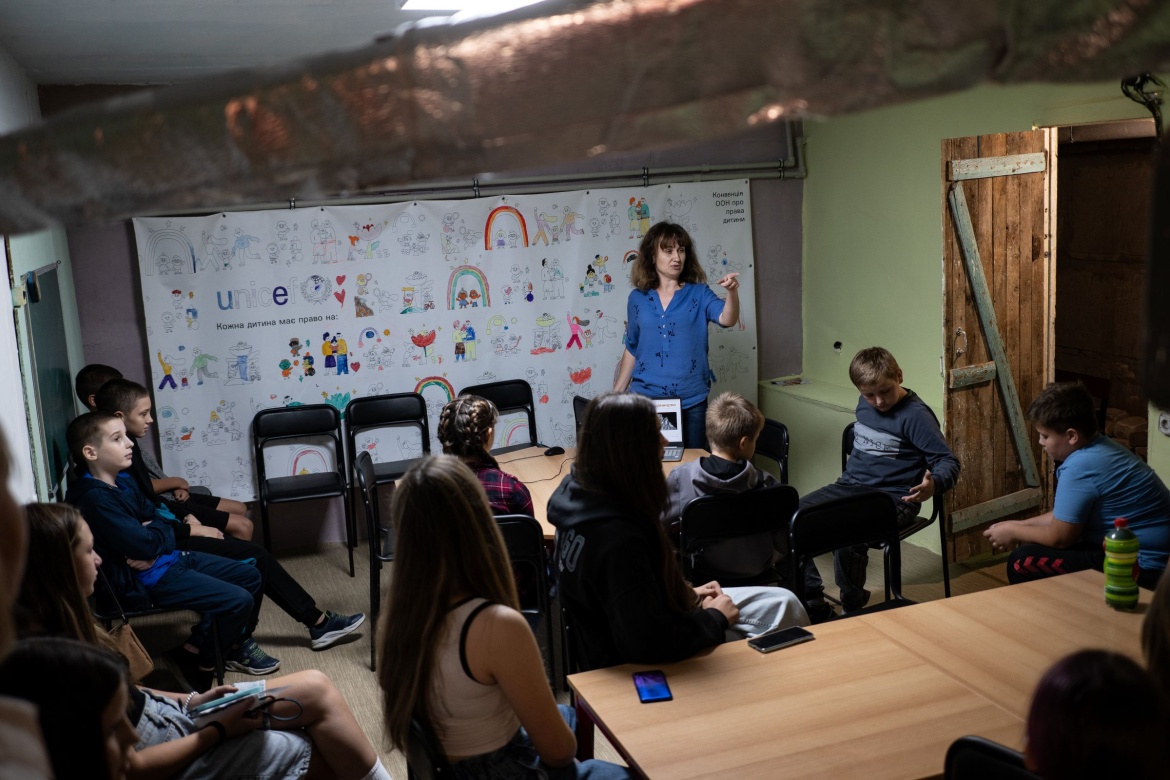
School children concentrate during a lesson in the basement of the Snihurivka Lyceum in Snihurivka, Mykolaiv Region, Ukraine. Credit: Oleksandr Techynskyi/AP Images for GPE

School children concentrate during a lesson in the basement of the Snihurivka Lyceum in Snihurivka, Mykolaiv Region, Ukraine.

Credit:
Oleksandr Techynskyi/AP Images for GPE

More and better financing for teachers

While we advocate for increasing investment in education, chronic underfunding, fiscal pressures and aid cuts are squeezing education budgets around the globe. This has major implications for the financing of teaching profession, since teacher salaries make up the largest share of recurrent education spending.

At the same time, there are acute teacher shortages and attrition in many countries. In order to fill these gaps, we must mobilize more financing even in the present circumstances. At the same time, we must work to ensure that these resources are more equitably and efficiently allocated.

For GPE, this reaffirms the need for a range of mechanisms and tools to support more and better financing for teachers, including innovative financing. For example in Côte d’Ivoire, a creative debt swap arrangement through GPE’s Debt2Ed is channeling resources into improving education quality with a special focus on teacher training and professional development.

The GPE Multiplier is another innovative tool to leverage additional financing for quality teaching. El Salvador has used GPE Multiplier funding to train nearly 30,000 teachers and school leaders to improve early childhood education, foster inclusion for children with disabilities and support the reintegration of returning migrant students.

In Ukraine, Multiplier funding is supporting the training of tens of thousands of teachers nationwide and establishing digital learning centers, ensuring that educators and displaced children can continue their education and access psychosocial support amid conflict.

GPE’s approach to results-based financing is another important mechanism, allowing for grant ‘top-ups’ to support partner country governments to stay on track and achieve tangible results.

Through this approach, Cameroon and Sierra Leone have moved thousands of teachers—previously funded by communities—onto the government payroll, easing the burden on low-income households as a result, while Tanzania has applied a nationwide teacher deployment policy that placed 98% of new primary teachers in schools with the greatest need, making education spending more equitable.

The issue of education financing is front and center as GPE has just launched its 5th financing campaign to mobilize $5 billion and unlock an additional $10 billion in cofinancing from partners to multiply learning possibilities for 750 million children in 96 countries.

With needs rising and the clock ticking down on the Sustainable Development Goals, the next 5 years are a unique opportunity to significantly accelerate progress toward the sustainable education financing needed for quality teachers and teaching.

By investing in teachers today, we lay the foundation for quality education that can unlock this generation’s potential to seize opportunities and overcome 21st-century challenges for a better future.

Related blogs

Leave a comment

Your email address will not be published. All fields are required.

The content of this field is kept private and will not be shown publicly.

Comments

  • No HTML tags allowed.
  • Lines and paragraphs break automatically.
  • Web page addresses and email addresses turn into links automatically.